
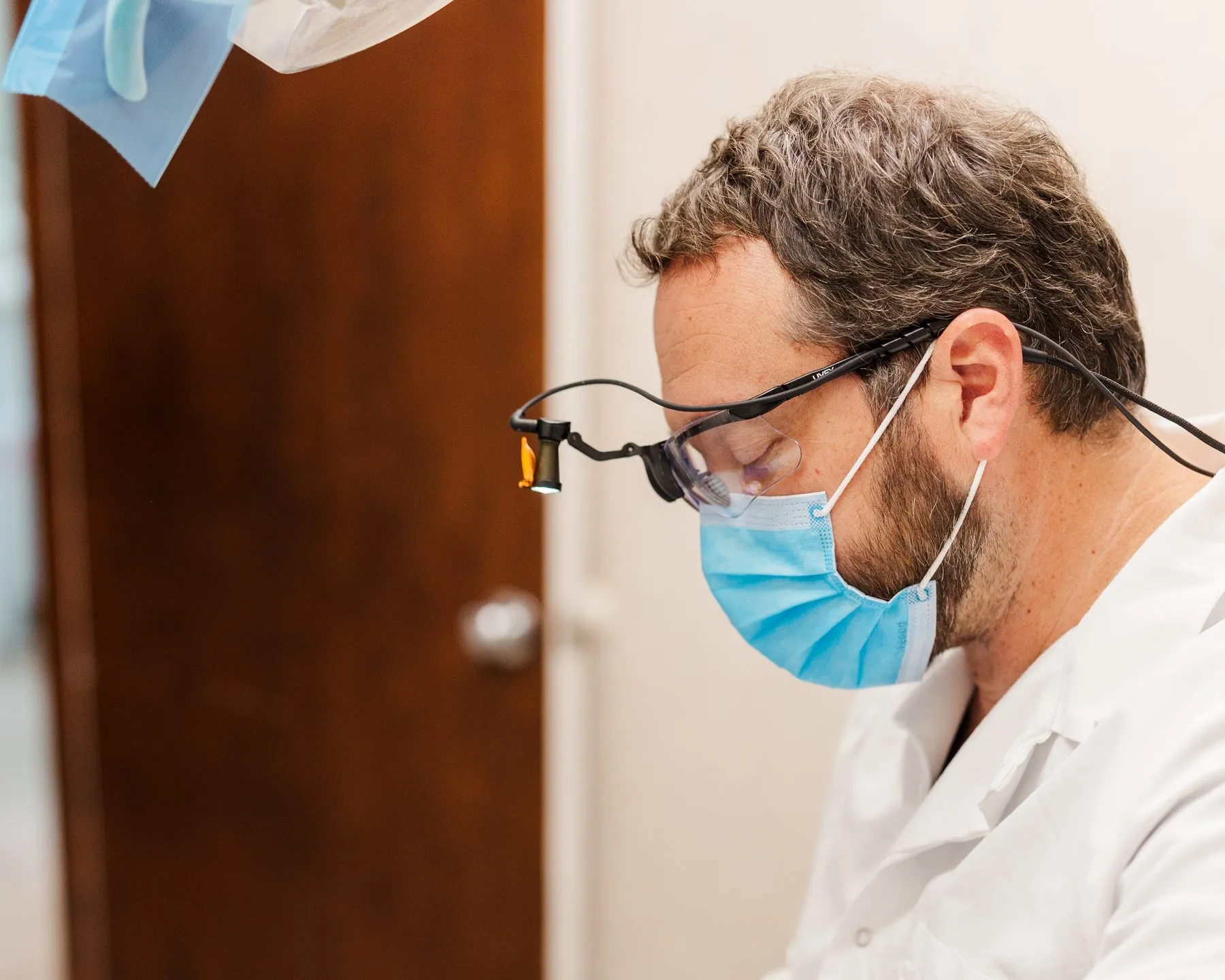
When Tooth Extraction Is the Right Call
Pulling a tooth comes after repairs can’t fix it. Common reasons include a tooth broken below the gumline, decay that has reached too deep, and gum disease that has loosened a tooth in its socket. Some of those teeth can still be saved with a root canal, which we refer to a specialist. Dr. Bailey walks you through both paths before anything comes out.
What to Expect During a Tooth Extraction
- Exam + x-ray. Dr. Bailey checks the tooth and the roots underneath to decide whether it comes out here or needs an oral surgeon, such as when the roots sit close to the sinus or a nerve.
- Numbing. A local anesthetic numbs the tooth and the gum around it. You stay awake and feel pressure as the tooth loosens.
- Removal. Dr. Bailey loosens the tooth and lifts it out.
- Gauze + instructions. You bite on gauze to help a blood clot form in the socket, and you leave with aftercare instructions.
We don’t offer sedation or nitrous oxide. If an extraction makes you nervous, say so when you call. Dr. Bailey will explain each step before he starts, and oral surgeons often offer sedation for more involved cases.
Tooth Extraction Aftercare That Protects the Clot
That blood clot is the bandage your socket heals under, so the first 2 days are about leaving it alone.
- Skip straws, smoking, and vaping. The suction and chemicals can pull the clot loose.
- Don’t spit or rinse hard. Rinse gently only when your instructions say to start.
- Eat soft foods and chew on the other side.
- Take it easy. Hold off on heavy lifting and hard workouts for a couple of days.
Call us if the pain gets worse after a few days or medication doesn’t touch it, if you run a fever of 100.4°F or higher, or if you notice pus around the socket. After hours, call the office and stay on the line: our voicemail explains how existing patients can reach Dr. Bailey.
What Replaces a Tooth After Extraction
A missing tooth lets its neighbors drift, so it pays to plan the replacement early. An implant crown, a bridge, or a partial denture can fill the gap. For an implant, an oral surgeon places the post and Dr. Bailey builds the crown that goes on top. The bone needs time to heal first, which gives you room to weigh the options.